
The Evolution of Generative AI: Expanding Boundaries and Remodelling Industries
Introduction
Generative Artificial Intelligence (AI) has undergone a rapid evolution in recent years, and its impact extends far beyond the realm of technology. This groundbreaking technology is reshaping industries and expanding boundaries in ways previously unimaginable. From healthcare to entertainment, Generative AI is revolutionizing the way we interact with machines and creating new possibilities for innovation. In this article, we will explore the evolution of Generative AI, its current applications, and its potential to remodel industries across the board.
The foundation of Generative AI
Generative Artificial Intelligence (AI) is built on the foundation of deep learning and neural networks. Artificial Neural Networks are composed of interconnected layers of artificial neurons, known as nodes. Each node performs simple mathematical operations on the input it receives and passes the result to the next layer of nodes. The connections between nodes have weights that determine the strength of the signal transmitted through them.
Generative AI utilizes these neural networks to generate new data or outputs that resemble a training set. This is done by training the neural network on a large dataset and then using the learned patterns to generate new samples that are similar in style or content.
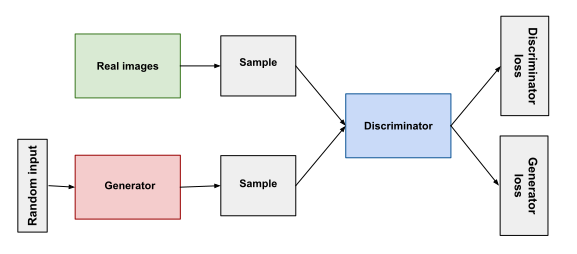
Generative AI can be further categorized into two main types: generative adversarial networks (GANs) and autoencoders.
1. Generative Adversarial Networks (GANs): GANs consist of two neural networks, a generator and a discriminator, that work together competitively. The generator network generates new data samples, such as images or text, while the discriminator network tries to distinguish between real and generated samples. Through an iterative process, the generator network learns to produce samples that are indistinguishable from real ones, while the discriminator network becomes better at detecting generated samples.
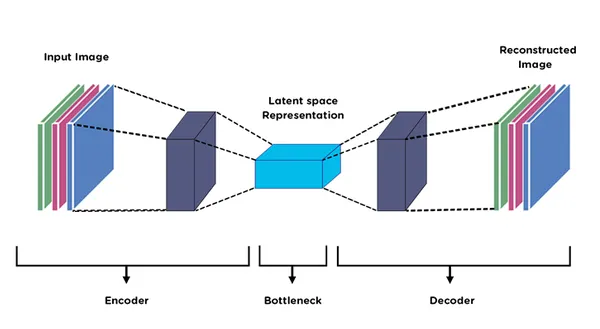
2. Autoencoders: Autoencoders are neural network architectures that are designed to learn an efficient representation (encoding) of the input data. They consist of an encoder network that compresses the input data into a lower-dimensional latent space and a decoder network that reconstructs the input data from the latent space. Autoencoders can be used for tasks such as image denoising, dimensionality reduction, and anomaly detection.
Generative AI has proven to be a powerful tool in various fields. In healthcare, it has been used to generate synthetic medical images for training and testing machine learning models, improving diagnosis accuracy and reducing the need for large labelled datasets. In the entertainment industry, generative AI has been used to create realistic virtual characters, generate lifelike animations, and even compose music.
As technology continues to advance, the capabilities of Generative AI are expected to expand even further. With ongoing research and development, we can expect to see more applications of generative AI in fields such as design, fashion, marketing, and creative storytelling. The ability to generate new and unique content has the potential to transform industries and push the boundaries of what is possible with artificial intelligence.
Breaking boundaries: Applications in various industries
Generative AI has already made a significant impact in various industries, pushing the boundaries of what is possible with artificial intelligence. Let's explore some of the applications of generative AI in different fields:
1. Design and Creativity: Generative AI has revolutionized the design process by enabling designers to create new and unique designs. It can generate endless variations of designs, which can be used in areas such as graphic design, architecture, and product design. Designers can input specific parameters and let the AI generate multiple design options, allowing them to explore new creative possibilities.
2. Fashion: Generative AI has been used in the fashion industry to create new clothing designs and patterns. Designers can input specific preferences and constraints, and the AI can generate a range of options based on those inputs. This not only speeds up the design process but also helps designers explore new styles and trends. Additionally, generative AI can be used to create virtual models for online shopping platforms or to generate custom-fit clothing patterns.
3. Marketing and Advertising: Generative AI has the potential to transform marketing and advertising campaigns by creating personalized content at scale. It can generate targeted advertising materials based on consumer preferences and demographics. For example, generative AI can create customized product descriptions, social media posts, and even personalized videos. This helps businesses connect with their audience on a deeper level and improve customer engagement.
4. Music and Art: Generative AI has been utilized in the creative arts to generate music compositions, paintings, and other forms of artwork. Artists and musicians can input specific styles or genres, and the AI can create original pieces based on those inputs. This opens up a whole new world of creative possibilities, allowing artists to experiment with different styles and push the boundaries of traditional art forms.
5. Gaming and Virtual Reality: Generative AI has immense potential in the gaming industry. It can be used to create dynamic and immersive game worlds, generate realistic characters and animations, and even generate personalized gameplay experiences for individual players. Additionally, generative AI can enhance virtual reality experiences by creating realistic virtual environments and interactive elements.
As the field of generative AI continues to evolve, we can expect to see even more groundbreaking applications in various industries. The ability to generate new and unique content will continue to drive innovation and transform the way businesses operate. Generative AI has the power to break boundaries and reshape industries, offering endless possibilities for creativity, personalization, and efficiency.
The impact on the creative industry
Generative AI has had a profound impact on the creative industry, revolutionizing the way artists and designers approach their work. By leveraging the capabilities of generative AI, creative professionals can push the boundaries of their creativity and explore new artistic possibilities. Let's delve into the specific ways in which generative AI has transformed the creative industry:
1. Artistic Exploration: Generative AI has provided artists with a tool to expand their artistic exploration and experimentation. Artists can input specific styles, themes, or parameters into the AI, and it can generate original artwork based on those inputs. This enables artists to explore new artistic styles, techniques, and concepts that they may not have considered otherwise. It opens up a world of possibilities for artists to push the boundaries of traditional art forms and create innovative and unique pieces.
2. Collaboration with AI: Generative AI has facilitated collaboration between human artists and AI algorithms. Artists can use generative AI as a tool to enhance their creative process, working alongside the AI to generate ideas, concepts, or elements that they can further develop or incorporate into their artwork. This collaboration allows artists to combine their unique vision and creativity with the computational power and capabilities of AI, resulting in truly unique and groundbreaking creations.
3. Creative Assistance: Generative AI can serve as a valuable tool for artists, providing assistance and inspiration throughout the creative process. Artists can use generative AI to generate initial sketches, colour palettes, or compositions, which can serve as a starting point or source of inspiration for their artistic endeavours. This not only saves time and effort but also stimulates creativity by offering new perspectives and possibilities.
4. Personalization and Customization: Generative AI has empowered artists to create personalized and customized artwork for their audience. By using generative AI algorithms, artists can generate pieces that are tailored to individual preferences, ensuring a more engaging and meaningful experience for viewers. This level of personalization allows artists to establish deeper connections with their audience and cater to their unique tastes and interests.
5. Automation of Repetitive Tasks: Generative AI has automated certain repetitive tasks in the creative industry, allowing artists to focus more on the creative aspects of their work. For example, generative AI can automate the generation of background elements, textures, or patterns, providing artists with more time and energy to dedicate to the core aspects of their artistic process.
Overall, generative AI has had a transformative impact on the creative industry. It has expanded the horizons of artistic exploration, fostered collaboration between human artists and AI algorithms, provided creative assistance and inspiration, enabled personalization and customization, and automated repetitive tasks. As generative AI continues to evolve, we can expect it to further push the boundaries of creativity and reshape the way art is developed and appreciated. The creative industry has embraced generative AI as a powerful tool that enhances the creative process, fosters innovation, and creates new avenues for artistic expression.

Transforming Healthcare and Science with Generative AI
Beyond its impact on the creative industry, generative AI has also been instrumental in transforming the fields of healthcare and science. With its ability to generate realistic and accurate data, simulate complex systems, and assist in research and diagnosis, generative AI holds immense potential for advancing medical breakthroughs and scientific discoveries. Let's explore the specific ways in which generative AI is reshaping these industries:
1. Medical Imaging and Diagnosis: Generative AI algorithms have proven to be invaluable in medical imaging and diagnosis. They can generate high-resolution images that have the potential to improve the accuracy of radiological diagnoses, detect abnormalities, and assist in the early detection of diseases such as cancer. By leveraging generative AI, medical professionals can obtain detailed insights and make more informed decisions, ultimately leading to improved patient outcomes.
2. Drug Discovery and Development: Generative AI is revolutionizing the drug discovery and development process, which traditionally involves time-consuming and costly experiments. With generative AI, researchers can simulate the behaviour of molecules, predict their properties, and design novel drug compounds. This accelerates the discovery of potential therapeutics and reduces the costs associated with testing and experimentation. Generative AI also has the potential to optimize drug dosages and treatment plans through personalized medicine, tailoring treatments to individual patients based on their unique characteristics.
3. Disease Modeling and Prediction: Generative AI can simulate complex biological systems and help model the progression of diseases. By incorporating various factors such as genetics, lifestyle, and environmental factors, generative AI algorithms can provide insights into disease patterns, predict the likelihood of disease occurrence, and assist in developing preventive measures and personalized treatments. This has the potential to revolutionize epidemiology and public health strategies, enabling proactive interventions and improving population health outcomes.
4. Medical Research and Study Design: Generative AI algorithms can assist researchers in designing efficient and robust studies, optimizing sample sizes, and identifying potential biases. By simulating various scenarios, generative AI can guide researchers in selecting the most appropriate experimental conditions, ensuring reliable and reproducible results. This enhances the scientific rigour of studies and accelerates the pace of research.
5. Patient Care and Monitoring: Generative AI has the potential to transform patient care and monitoring by analyzing large volumes of patient data, identifying patterns, and providing real-time insights. By leveraging generative AI, healthcare providers can develop personalized treatment plans, predict disease progression, and monitor patient health remotely. This not only improves the quality of care but also enables early intervention and reduces the burden on healthcare systems.
Generative AI has emerged as a powerful tool in healthcare and science, enabling researchers, clinicians, and scientists to explore new frontiers, accelerate discoveries, and improve patient outcomes. As generative AI continues to evolve, we can expect it to play an increasingly significant role in revolutionizing healthcare and driving scientific advancements. The integration of generative AI into these industries holds the promise of transforming the way we approach healthcare delivery, disease prevention, and scientific exploration.
The ethical considerations of Generative AI
As generative AI continues to advance and reshape industries such as healthcare and science, it is crucial to consider the ethical implications that arise alongside these developments. While generative AI offers remarkable opportunities and benefits, it also raises important concerns and challenges that need to be addressed. Here are some of the ethical considerations associated with generative AI:
1. Privacy and Data Protection: Generative AI relies heavily on large datasets to generate realistic and accurate outputs. However, the use of personal data raises concerns regarding privacy and data protection. It is essential to ensure that appropriate measures are in place to protect individuals' information, particularly in sensitive domains such as healthcare. Transparent data handling practices, informed consent, and robust security measures are necessary to safeguard privacy rights.
2. Bias and Fairness: Generative AI systems are trained on existing datasets, which may reflect societal biases or inequalities. If these biases are incorporated into generative AI models, they can perpetuate and amplify existing disparities. It is crucial to address and mitigate bias throughout the development process, ensuring fairness and avoiding potential harm to individuals or marginalized groups.
3. Accountability and Transparency: Generative AI systems often operate as black boxes, making it challenging to understand the underlying processes and decision-making. This lack of transparency raises concerns about accountability and the potential for unintended consequences. Efforts should be made to increase the explainability of generative AI algorithms, allowing users to understand and scrutinize their outputs and decisions.
4. Intellectual Property and Copyright: Generative AI raises novel questions regarding intellectual property rights and copyrights. When AI systems create original works, such as artwork or music, determining ownership and copyright becomes complex. Clear guidelines and regulations are needed to address these issues and ensure fair attribution and protection of intellectual property rights.
5. Manipulation and Misuse: Generative AI has the potential to be used for malicious purposes, such as creating deep fakes or spreading misinformation. The ease with which AI-generated content can be manipulated poses significant risks to individuals, organizations, and society as a whole. Robust mechanisms for detecting and mitigating misuse of generative AI technologies are crucial to prevent harm and maintain trust.
6. Human Oversight and Control: While generative AI systems can autonomously generate outputs, human oversight and control are essential to ensure ethical and responsible use. Human judgment and intervention are necessary to evaluate the context, assess potential risks, and make informed decisions regarding the deployment and limitations of generative AI technologies.
7. Impact on Jobs and Workforce: As generative AI automates certain tasks and processes, concerns arise regarding its potential impact on jobs and the workforce. While generative AI can enhance productivity and efficiency, it may also lead to job displacement or changes like work. It is crucial to anticipate and address these impacts by investing in reskilling and upskilling programs to support affected workers.
Addressing these ethical considerations requires a multidisciplinary approach involving stakeholders from various domains, including policymakers, AI developers, ethicists, legal experts, and the public. Open dialogue, collaboration, and responsible development practices are essential to ensure that generative AI technology contributes positively to society while minimizing harm and upholding ethical standards. By proactively addressing these considerations, we can harness the full potential of generative AI while maintaining trust, fairness, and respect for individuals' rights and well-being.
Looking towards a future shaped by Generative AI
Generative AI has come a long way since its inception and continues to push the boundaries of what is possible in various industries. As we look towards the future, it is clear that generative AI will play a significant role in shaping the world around us. Here are some areas where we can expect to see the impact of generative AI in the coming years:
1. Healthcare: Generative AI has already shown tremendous potential in the field of healthcare. From assisting in the diagnosis of diseases to predicting patient outcomes, generative AI can help healthcare professionals make more informed decisions and provide personalized treatment plans. In the future, we can expect to see generative AI being used to develop new drugs and treatment modalities, revolutionizing the way healthcare is delivered.
2. Entertainment and Creative Industries: The entertainment and creative industries have already started harnessing the power of generative AI. From generating realistic visual effects in movies to creating music and artwork, generative AI is allowing artists to explore new horizons and push the boundaries of creativity. In the future, we can expect to see generative AI being used to create immersive virtual reality experiences and interactive storytelling, providing audiences with unprecedented levels of engagement.
3. Manufacturing and Design: Generative AI has the potential to transform the manufacturing and design industries by enabling automated design optimization. By simulating thousands of design iterations and identifying the most efficient and cost-effective solutions, generative AI can help manufacturers streamline their production processes and reduce waste. This can result in significant cost savings and improved product quality.
4. Financial Services: The financial services industry is no stranger to the potential of AI, and generative AI is no exception. In the coming years, we can expect to see generative AI being used to improve risk assessment and fraud detection, automate investment strategies, and personalized financial advice. By leveraging the power of generative AI, financial institutions can enhance their decision-making processes and provide more tailored services to their customers.
5. Education and Training: Generative AI has the potential to revolutionize education and training by creating personalized learning experiences. By analyzing individual learning patterns and preferences, generative AI can adapt educational content and delivery methods to suit the needs of each student. This can result in more effective learning outcomes and a more engaging educational experience.
6. Environmental Sustainability: Generative AI can also contribute to addressing some of the world's most pressing challenges, such as climate change and environmental sustainability. By analyzing vast amounts of data and simulating various scenarios, generative AI can help identify optimal strategies for resource management, energy efficiency, and waste reduction. This can lead to more sustainable practices and a greener future.
7. Ethical considerations and regulation: As the use of generative AI becomes more widespread, it is crucial to address the ethical considerations and regulatory frameworks surrounding its use. Issues such as privacy, accountability, fairness, and transparency need to be carefully considered to ensure that generative AI is used responsibly and for the benefit of society as a whole.
In conclusion, the future of generative AI looks promising and exciting. From healthcare to entertainment, manufacturing to education, the impact of generative AI is set to be far-reaching. As we continue to explore the possibilities and address the challenges, it is essential to approach the development and deployment of generative AI with a mindful and responsible mindset, ensuring that it benefits everyone and creates a positive and inclusive future.
Conclusion: Embracing the Potential of Generative AI
Generative AI has come a long way and has proven to have a significant impact on various industries. As we look towards the future, it is clear that generative AI will continue to expand its boundaries and remodel industries in unprecedented ways.
In the healthcare industry, generative AI has already shown tremendous potential in assisting with diagnoses, predicting patient outcomes, and even developing new drugs and treatment plans. This technology has the power to revolutionize healthcare delivery and improve patient care.
The entertainment and creative industries have also been quick to harness the power of generative AI. From generating realistic visual effects in movies to creating music and artwork, generative AI has allowed artists to push the boundaries of creativity and provide audiences with immersive experiences.
Manufacturing and design industries can benefit greatly from generative AI. By enabling automated design optimization and identifying the most efficient and cost-effective solutions, generative AI can help streamline production processes and reduce waste, leading to significant cost savings and improved product quality.
Financial services can leverage generative AI to enhance their decision-making processes, improve risk assessment and fraud detection, automate investment strategies, and personalized financial advice. This technology can provide tailored services to customers and improve overall financial outcomes.
The potential of generative AI to revolutionize education and training is immense. By analyzing individual learning patterns and preferences, generative AI can create personalized learning experiences that adapt to the needs of each student, resulting in more effective learning outcomes and a more engaging educational experience.
Addressing global challenges such as climate change and environmental sustainability can also benefit from generative AI. By analyzing vast amounts of data and simulating various scenarios, generative AI can help identify optimal strategies for resource management, energy efficiency, and waste reduction, contributing to a more sustainable future.
However, as generative AI becomes more widespread, it is important to address ethical considerations and establish regulatory frameworks. Privacy, accountability, fairness, and transparency must be carefully considered to ensure the responsible and beneficial use of generative AI for the greater good of society.
In conclusion, the future of generative AI is promising and exciting. From healthcare to entertainment, manufacturing to education, and environmental sustainability, the potential of generative AI to reshape industries and improve lives is evident. Embracing this technology with a mindful and responsible mindset will ensure that generative AI creates a positive and inclusive future for all.
Login to Like
0 Comments
0 Likes
Add Comment
Login to Comment